
“Our knowledge can only be finite, while our ignorance must necessarily be infinite.”
— Karl Popper
Part I
Laius, King of Thebes, went to Delphi seeking counsel about his house.
The oracle declared that if he fathered a son, that boy would kill him—and take Jocasta, his wife, as his own. Even so, one evening he lay with her and forged his fate.
Nine moons waned, and the news was delivered: Jocasta had given him a son.
Laius recalled the prophecy. To forestall it—Cronus-like—he resolved to destroy the child. He would not wait to see.
The king ordered his son’s ankles pierced and bound with a leather thong, and commanded a shepherd to carry the infant to Mount Cithaeron to be exposed and left to die.
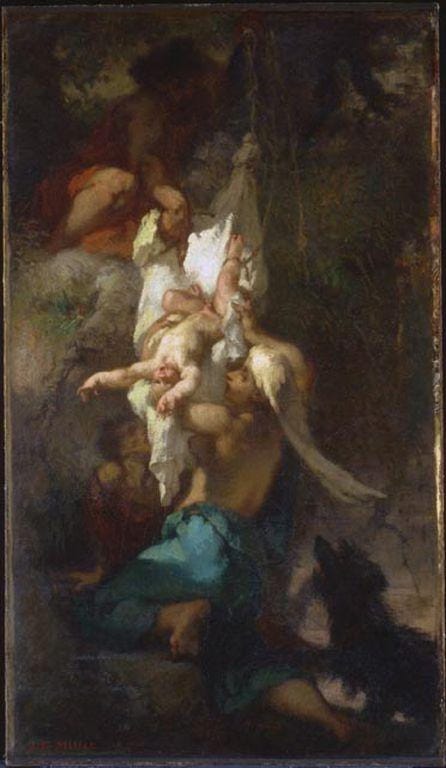
Yet as Laius’s shepherd bore the infant to the slopes, pity stirred within him, and he placed the wounded boy in the hands of a Corinthian shepherd.
No stranger to want, the Corinthian knew he could not raise the child himself. So he brought the boy to King Polybus and Queen Merope of Corinth. Having no heir, they received the child as their own and named him Oedipus, for his swollen feet.
Oedipus grew tall and strong in the house of Polybus, secure in the belief that the king and queen of Corinth were the source of his royal blood.
One day the prince attended a feast, and a man flushed with wine called him a bastard. Enraged, Oedipus struck him.
The word troubled him.
Less sure-footed, he wandered through his father’s house. Though he smiled, the echo would not fade.
Within, a fissure had opened.
Seeking to silence the question, he approached his parents, and spoke it aloud.
Angered, they rebuked the drunken man, and denied any deception: Oedipus was their true son, and rightful heir to the throne.
But his doubt refused to be silenced.
Seeking firmer ground, he set his course for Delphi to learn the truth of his birth. The oracle did not answer his question. Instead it proclaimed:
You will kill your father and marry your mother.
That very night, to protect his parents, Oedipus fled Corinth.
“I am wiser than this man… I am quite conscious of my ignorance.”
— Socrates, Apology
📘 Begin here | ⬅️ Previous Waypoint (4.6) | ➡️ Next Waypoint (5.2)
☕️ To support the writing, you can buy me a coffee.
Support the project—and share this with someone who might recognize it.


